Efficiency Retrofits for Commercial Real Estate
that Increase NOI
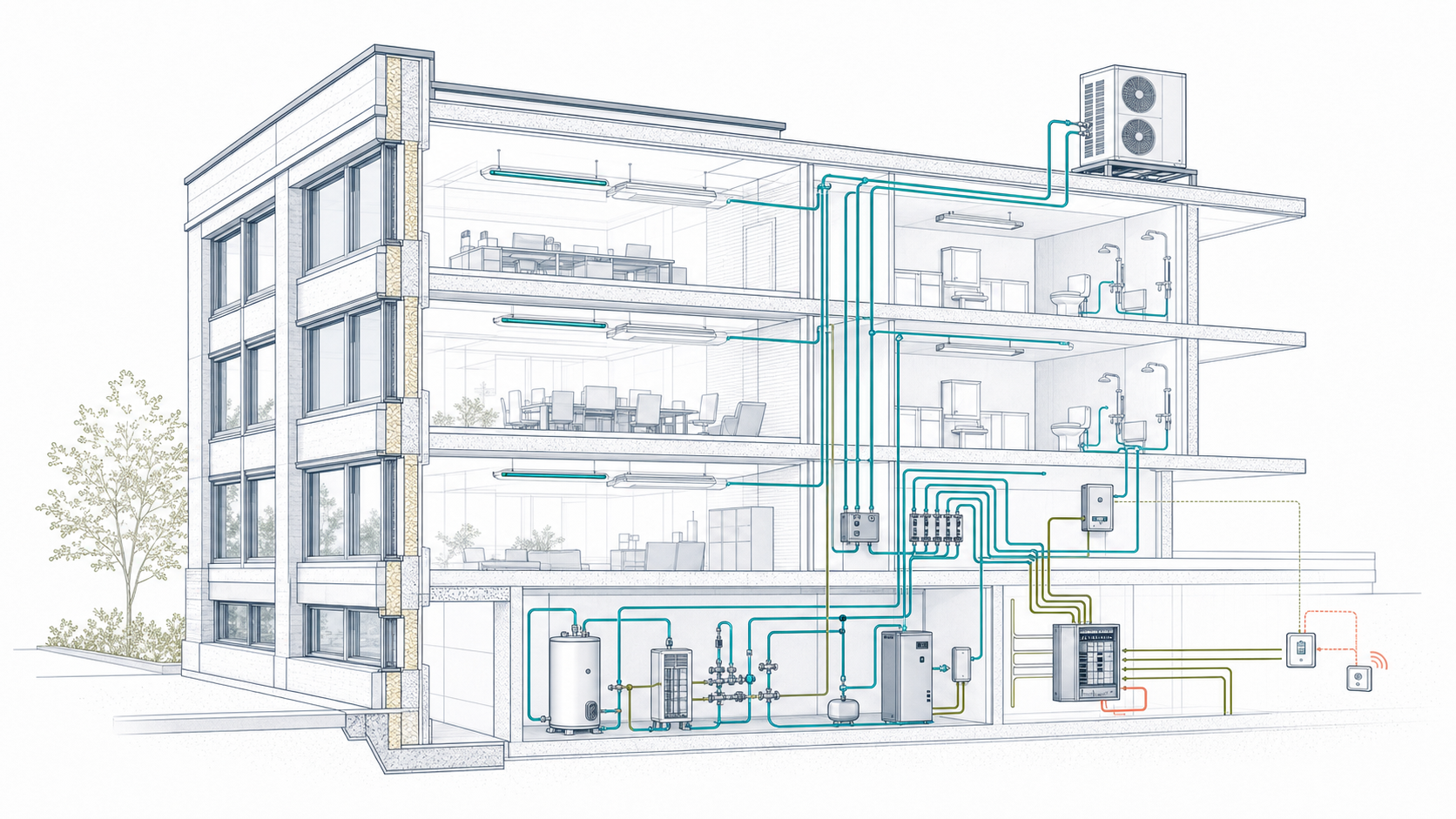
EcoSmart designs and delivers comprehensive commercial building efficiency retrofit programs for existing multifamily, mixed-use, office, industrial, and hospitality assets. Each program is capital-plan-aligned and holistically addresses mechanical systems, building envelope, lighting, controls, water efficiency, on-site energy generation and storage as well as EV charging infrastructure.
Efficiency retrofits deliver measurable, lasting improvements across five dimensions of asset performance:
Equipment life cycles reset. Aging systems are replaced, eliminating the recurring mid-life capital events that erode returns.
Operating costs decline. High-efficiency systems reduce energy consumption and utility spend, improving OPEX margins directly.
Maintenance burden drops. Newer, optimized systems require less reactive maintenance and fewer unplanned repairs.
Tenant experience improves. Better comfort, reliability, and lower utility costs support occupancy stability and retention.
Compliance positioning strengthens. Reduced energy and carbon intensity addresses building performance standards and institutional ESG requirements.
Every retrofit program is structured to be financeable from the outset. Delivery options include owner-funded capital, sourced debt, or C-PACE financing, which allows owners to fund upgrades through future energy savings without drawing on existing equity or credit. EcoNOC®, EcoSmart's proprietary performance monitoring and management platform, is incorporated to maintain performance visibility, verify realized savings, and provide the institutional reporting required by lenders and investors.
Water efficiency is treated as a core operating lever alongside energy performance. Reducing water use intensity across mechanical systems, fixtures, and irrigation has direct and measurable impact on operating cost and NOI, and is increasingly relevant to ESG reporting requirements across institutional portfolios.
NOI Improvement. Lower utility, maintenance, and repair costs flow directly to net operating income. For assets carrying debt, stronger NOI improves cashflow and the asset's position with lenders.
Asset Value Creation. Higher NOI and verified, durable performance translate into greater appraised value at refinance or sale.
Capital Efficiency. Flexible financing keeps improvements off the owner's balance sheet where possible, preserving equity and credit capacity for other priorities.
Risk Reduction. Modernized systems and verified performance lower exposure to energy-price volatility, deferred maintenance, and building performance standard penalties across the hold period.
Every program begins with a comprehensive assessment of the asset's mechanical performance, capital plan, compliance exposure, and financing options. Scope is then built around the strongest financial return for that specific asset.
HVAC replacement or upgrade, heat pump conversion, domestic hot water systems, and combustion elimination where electrification improves operating economics and compliance positioning.
Insulation, air sealing, window upgrades, and roof improvements that reduce heating and cooling load, improve tenant comfort, and lower the energy demand the mechanical system must serve.
LED conversion and advanced lighting controls across common areas, parking, and individual units. One of the highest-return scope items available in existing commercial assets.
Low-flow fixtures, smart irrigation, cooling tower optimization, and submetering to reduce water use intensity and operating cost across the asset.
Rooftop and carport solar, battery storage, and microgrid systems integrated into the retrofit scope. EcoSmart's optional Energy-as-a-Service model keeps generation and storage assets off the owner's balance sheet while delivering below-market energy costs and on-site resilience.
Level 2 and DC fast charging installation for multifamily and commercial assets, structured to meet current demand and scale as adoption increases.
EcoSmart identifies and processes applicable utility rebates, state incentive programs, and federal tax credits available for each scope item, reducing net project cost and improving return on investment.


